

Unleashing the Power of AI for Process Discovery
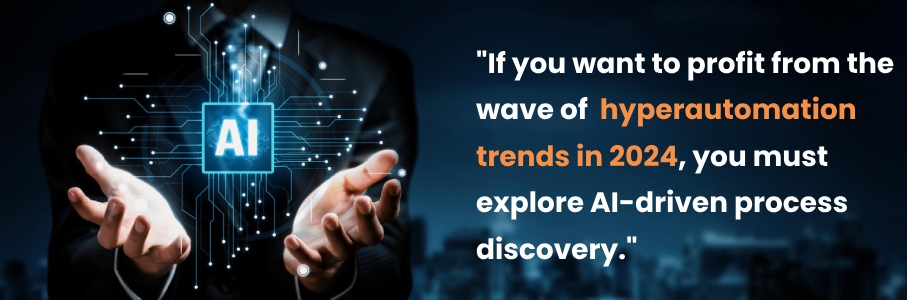
Mapping out business processes has been slow and subjective. It relied on employee interviews, fragmented documentation, and guesswork. AI-driven process discovery changes this. It combines process mining with machine learning and AI assistance to turn ERP, CRM, and workflow data into a transparent, data-backed view of how work actually runs. It’s like having a digital detective that not only finds hidden inefficiencies, unnecessary variations, and compliance risks, but also helps teams prioritize fixes and automation candidates faster. Industry leaders are moving toward “process AI” experiences that recommend process models, metrics, and improvements, so discovery flows directly into action.
Benefits Beyond Speed
This trend speeds up process identification. But, the real power of AI is seeing patterns humans miss and turning them into practical, prioritized opportunities. In 2026, the “advanced” approach is pairing AI discovery with process intelligence and orchestration so teams can validate impact, set policy guardrails, and automate with confidence, especially in regulated or high-risk workflows. This opens the door to improving processes in new ways while keeping humans in the loop for high-stakes decisions.
Example
An insurance company struggling with slow claim processing times. AI could find that many delays come from something other than judging claims. They are from checking customer data across old systems. This insight could lead to an automation solution. It would blend those systems, cutting wait times for customers.
Citizen Developers: The New Heroes of Automation
The rise of the citizen developer remains one of the most exciting hyperautomation trends in 2026. Low-code and no-code platforms are breaking down the barriers of traditional software development, and AI copilots are making automation building even more accessible. The best results come when organizations pair this democratization with a lightweight platform team that provides secure templates, approvals, and governance guardrails, so non-technical domain experts can build safely and consistently.
The Power of Localized Solutions
No one understands the inefficiencies and pain of their tasks better than employees. Citizen developers can create custom automation. It solves real problems they face every day. This can be from automating simple tasks to enhancing complex workflows. The enhancements improve their teams’ productivity and job satisfaction.
Benefits Beyond the Individual
The benefits ripple outward. Citizen development:
- Frees up IT resources. It lets IT pros focus on big projects instead of building minor fixes.
- It speeds up innovation. Employees at all levels are empowered to experiment, test, and iterate. This results in faster innovation.
- Boosts morale and engagement: People feel pride in improving their own work experience.
Example
A tired sales team member. They are updating spreadsheets with data from different sources each week. They could use a low-code platform to build a solution. It would pull the data, do calculations, and make the needed reports. This would save them hours of tedious work.
Getting Started with Citizen Development
If embracing this trend is on your roadmap for 2026, consider these key steps:
- Identify Automation Champions. Look for workers who show problem-solving skills and a love for technology.
- Provide Training and Governance. Offer focused training on your chosen platform, and set clear guardrails for data access, environment controls, approvals, and auditability.
- Standardize reusable building blocks. Give teams approved connectors, templates, and patterns so they build faster without increasing risk.
- Celebrate success. Showcase your citizen developers’ accomplishments. They will inspire others and foster an innovative culture.
Hyperautomation: The Frontline Defense Against Cyber Threats
In the escalating battle against cybercrime, hyperautomation is emerging as a game-changer. Threats are increasing in volume and sophistication, and security teams are buried in alerts and repetitive work. In 2026, the more advanced approach is not just “more automation,” but governed automation that improves response speed while maintaining clear accountability and audit readiness.
Hyperautomation brings reinforcements to the fight. By automating crucial aspects of security operations with playbooks and policy guardrails, it delivers several significant advantages:
- Speed is key. Automated detection and response can cut the time between an attack and action, reducing breach impact.
- Automation takes on the burden of routine monitoring, patch coordination, and alert triage so experts can focus on threat hunting and complex incidents.
- Minimizing Human Error: Automation reduces mistakes in high-pressure moments and supports consistent execution across shifts and teams.
Example
A phishing attack targeting employees. An automated system could find suspicious emails based on specific patterns. It would then quarantine them and alert relevant staff. It might take further action. For example, it might automatically roll out a short security training to affected users.
Implementing Hyperautomation for Cybersecurity
Here are key areas where hyperautomation adds value to your cybersecurity posture:
- Automate finding and fixing vulnerabilities to reduce your attack surface.
- Use playbooks to orchestrate pre-defined actions during incidents, with approvals for high-impact actions to keep humans in control when it matters most.
- Automate threat intelligence collection and enrichment so analysts start with context, not raw alerts.
- Add AI governance practices for any AI-assisted security decisions (logging, oversight, and consistent policy enforcement) to reduce ethical and compliance risk.
The Future is Automated
As the digital world becomes more complex, so will cybercriminals’ tactics. They will gain a significant edge in the ongoing arms race. It will protect their data, their reputation, and their bottom line.
Process Mining: The X-Ray for Business Health
For years, understanding business processes relied on guessing, old documents, and employee interviews. This mix often led to incomplete or wrong assessments. Process mining changes this entirely. It reveals the truth about how your processes actually work by analyzing the digital footprints left by enterprise systems. In 2026, process mining increasingly shows up as “process intelligence,” where teams combine visibility with AI-assisted insights and recommendations to move from analysis to action faster. These include your ERP, CRM, and others.
Beyond Subjectivity
Instead of asking “How does this process work?” Process mining paints a data-driven picture. It visualizes:
- Bottlenecks: Where work stalls or slows down
- Deviations are steps that are skipped, done out of order, or vary by team or person.
- Rework loops are tasks or processes that need to be redone. This is due to errors or inconsistencies.
- Hidden Costs: Inefficiencies that may not be obvious but add up to lost time and resources.
Example
An order fulfillment process riddled with delays. Process mining could show that the delays aren’t due to slow warehouse workers as assumed. Instead, they are caused by insufficient data being entered early on. This alarming data leads to re-work and backlogs later.
Why ‘Mainstream’ Matters
Process mining tools are becoming easier to use. This makes the barriers to adoption fall. This means:
- Businesses of all sizes benefit. What was once for large enterprises is now for smaller organizations.
- Process Focus Shifts. Instead of assuming, decision-makers now have data for improvements.
- Hyperautomation Foundation: Process mining is often the first step in any hyperautomation journey. It finds the best targets for optimization.
Breaking Down Silos: The Power of End-to-End Process Orchestration
Many automation efforts have focused on optimizing individual tasks. They automate an approval step here and a data entry task there. While individually beneficial, this approach can still leave processes fragmented. True end-to-end process orchestration takes a broader view. It aims to streamline whole business processes. It does this no matter how many systems or handoffs are involved.
The Orchestrator at Work
Think of it as a conductor orchestrating a symphony. A platform for end-to-end orchestration connects your automation tools, AI decision engines, integrations, and legacy systems so they work together as one flow. It manages dependencies, routes data, handles exceptions, and ensures every step happens in the correct order at the right time.
Example
An employee onboarding process. Orchestration can automate tasks across HR and IT. It creates profiles, provisions accounts and access, triggers equipment requests, and assigns training from a single approved request. When something fails, orchestration routes the exception to the right owner, captures what happened, and keeps the process moving without silent breakages.
Benefits Beyond Efficiency
- Fewer handoff failures: Exceptions are handled consistently instead of disappearing across teams.
- Clear visibility: Orchestration provides end-to-end status across systems, not “bot-by-bot” progress.
- More resilient automation: When a dependency changes, orchestration helps isolate impact and recover faster.
- Better governance: Teams can define who owns each step and how approvals work across the workflow.
Example
An employee onboarding process. Orchestration can automate tasks across HR and IT. It makes profiles. It sets up equipment and accounts. It sends welcome emails or assigns training. All this starts from a single input.
Taking the First Step
Embracing end-to-end orchestration might involve:
- Create process maps. They should clearly outline your most critical end-to-end processes. They should identify automation opportunities and current pain points.
- Choose an Orchestration Platform. Pick one that works with your current automation tools and business systems.
- Focus on high-impact processes. They deliver the most ROI and better customer experiences.
The Economic Trajectory of Hyperautomation
Hyperautomation is moving from “more bots” to enterprise-scale operating models built on process intelligence, orchestration, and AI governance. Gartner frames hyperautomation as a disciplined approach to rapidly identify and automate processes, and its 2026 technology trends highlight the push toward enabling non-technical domain experts with platform guardrails, alongside a growing focus on responsible innovation and digital trust.
In parallel, Gartner’s low-code outlook shows why democratized building continues to expand: by 2026, developers outside formal IT are expected to account for at least 80% of the user base for low-code tools, and the low-code market forecast reaches $44.5B by 2026.
The takeaway for leaders is simple: the winners will be the organizations that connect automation to measurable outcomes, build reusable building blocks, and govern AI-assisted automation so it scales without creating risk
Hyperautomation for Everyone: The Rise of HaaS
Hyperautomation as a Service (HaaS) democratizes access to this transformative technology. Cloud-based HaaS platforms offer many hyperautomation tools. These include RPA, process mining, AI, and decision engines. The platforms use a pay-as-you-go model. This removes the need for big upfront investments in software and infrastructure. It makes hyperautomation accessible to a much more comprehensive range of businesses.
Why HaaS Matters
- Barriers to entry are lower. Small and mid-sized businesses can now get the benefits of hyperautomation. They don’t need in-house expertise or large budgets.
- HaaS solutions quickly scale based on your needs. They are ideal for growing or variable organizations.
- Cloud deployment means businesses can get started quickly. They need to avoid lengthy implementation and hardware buying.
- Focus on Business Outcomes. By letting the HaaS provider do the technical work, organizations can focus on setting and meeting their automation goals.
Example
A rapidly growing e-commerce company facing mounting customer service inquiries. A HaaS platform could allow them to deploy AI-powered chatbots quickly. They could use it to add automated order tracking and simplify their returns process. They could do all this without investing in their own IT.
Key Considerations for HaaS
If HaaS is on your 2026 roadmap, it’s important to consider:
- Choose a provider with a strong track record, strong security, and proven integration options across your core systems.
- Using HaaS reduces technical burdens, but your team still needs training on approved patterns, data handling, and governance to get full value safely.
- The total cost matters. Evaluate subscription pricing, consumption-based add-ons, and operational costs so the service aligns with your business goals.
- Confirm auditability and accountability. Make sure the platform supports logging, ownership, and oversight for AI-assisted automation as autonomy increases.
The Future is in the Cloud
HaaS is set to grow a lot. Businesses want to become more adaptable and efficient without significant expenses. HaaS makes hyperautomation accessible to all. It opens doors for innovation and competitiveness across all industries.
Hyperautomation: The Key to Delighting Customers
In today’s experience-driven economy, customer expectations are higher than ever. Hyperautomation is key to meeting these expectations. It transforms customer service from a cost center to a driver of loyalty and growth.
How Hyperautomation Elevates CX
- Automation speeds up processes. These include order fulfillment, issue resolution, and providing information. Customers get answers faster, reducing frustration.
- Personalization at Scale: AI-powered hyperautomation can analyze customer data to customize interactions. It tailors offers and recommendations, making each person feel valued.
- Omni-Channel Consistency is key. It happens when interacting via chatbot, email, or phone. Hyperautomation ensures a smooth, seamless experience by linking processes across all touchpoints.
- Proactive Support: Automation can find potential problems early. For example, it can discover equipment needing service. Then, it can trigger preemptive support, stopping issues before customers experience them.
Benefits Beyond the Customer Interaction
- Lower handle time without losing quality: Automate repetitive steps while routing complex cases to the right experts.
- More consistent omnichannel journeys: Keep customer context and workflow status aligned across chat, email, and phone.
- Proactive resolution: Trigger support actions earlier using signals from operations, devices, or orders so issues are fixed before customers feel them.
Key Considerations for CX Automation
- Protect trust and privacy. Customer-facing automation increases data usage, so privacy controls and safe data access patterns are essential.
- Keep humans in control for sensitive moments. Use approvals and clear escalation paths for refunds, account actions, and high-impact decisions.
- Measure what matters. Track customer outcomes (resolution speed, repeat contacts, CSAT) instead of only internal efficiency metrics.
When Machines Talk, Automation Listens: The IoT-Hyperautomation Revolution
The Internet of Things (IoT) adds sensors to the physical world. They are on machines, vehicles, inventory, and even products. This flood of real-time data has enormous potential. But, handling and getting value from it at scale takes a lot of work. Enter hyperautomation.
By combining hyperautomation with IoT, we unlock the power of this data. It drives intelligent, real-time decision-making and optimization. This goes far beyond what was possible before.
Real-World Impact
- Predictive Maintenance avoids waiting for breakdowns. Sensors detect wear, triggering maintenance work orders or parts replacements. This prevents costly downtime and production losses.
- Smart Supply Chains: IoT tracks product location and conditions throughout the supply chain. Hyperautomation analyzes this data. It improves routing and inventory levels. It also reacts to disruptions like weather delays.
- Self-Optimizing Factories have production lines with IoT sensors. They allow for constant analysis of performance, quality, and the environment. Automation then fine-tunes operations to maximize efficiency and throughput.
Example
In the factory, machine vibration is a key sign of potential failure. IoT sensors constantly monitor vibrations, while hyperautomation systems analyze that data in real-time. The process can slow the machine to prevent damage if clear patterns emerge. It can also schedule a technician and reroute work to other machines. This ensures that production goals are still met.
Embracing the Convergence
To tap into this potential, consider:
- Identifying High-Impact Processes: Where can IoT data make the biggest difference? It’s in efficiency, cost savings, or customer experience.
- Build Data Pipelines. Make strong ways to collect, process, and share IoT data with your hyperautomation platform.
- Security: IoT increases potential attack surfaces. Security must be prioritized alongside your automation initiatives.
The Future is Responsive
IoT and hyperautomation are coming together. It’s not just about efficiency. It lets organizations quickly respond to change. This ability will be a big advantage. Markets and the world are evolving very fast.
Beyond the Technology: The Ethics of Hyperautomation
As hyperautomation and AI become more powerful. It’s not enough to only focus on efficiency or innovation. We must also watch over these technologies. We must ensure they are used in ethical, fair, and accountable ways.
Why Does This Matter?
- AI algorithms can inadvertently perpetuate existing biases. The biases are in the data they’re trained on. This leads to unfair or discriminatory outcomes.
- Transparency is key. You need to understand how a complex automated system reaches a decision. This is crucial for trust and the ability to correct errors.
- Protecting Privacy: Hyperautomation often involves collecting more data. Safeguarding user privacy is paramount.
- Upholding Accountability: Decisions are increasingly made by algorithms. It’s vital to have clear lines of responsibility for their outcomes.
Example
An AI-powered loan approval system. It might only accept credit to applicants from specific neighborhoods if carefully designed. This would be due to biases in data from history, even if the applicant is creditworthy. Ethical AI oversight aims to prevent such harmful outcomes.
Building Trust Through Responsible Automation
Here’s how thinking about ethics strengthens your 2026 hyperautomation strategy:
- Algorithmic Audits: Regularly check models for bias and unintended outcomes, especially when automation impacts people, access, or eligibility.
- Explainable AI: Use explainability methods where decisions must be understood, challenged, or corrected.
- Human-in-the-Loop: Build human oversight into high-stakes workflows, with clear escalation paths and accountability.
- AI Governance Platforms and Policy Guardrails: Gartner predicts organizations with comprehensive AI governance platforms will see fewer AI-related ethical incidents, which is why leading teams standardize controls, logging, and oversight as automation becomes more autonomous.
- Compliance readiness: The EU AI Act entered into force in 2024 and becomes fully applicable in August 2026, reinforcing the need for risk-based controls and transparency where relevant.
The Ethical Imperative
Companies that embrace ethical AI and responsible automation gain a major competitive advantage. It reduces risks. It fosters deep trust among customers and employees. This trust fuels long-term success.
Embracing the Future: Hyperautomation Trends 2025 and Beyond
We’ve explored the Hyperautomation Trends 2025. They include AI-driven process discovery and the rise of citizen development. These trends are reshaping the business landscape. Organizations strategically embracing these trends can unlock newfound efficiency, agility, and customer-centricity. Be aware of this race towards the future.
If you’re looking for a trusted guide to help you navigate hyperautomation in 2026, Sage IT is here for you. We bring proven expertise across process intelligence, orchestration, and automation delivery models that scale. We partner with you to design a hyperautomation strategy that fits your environment, backed by governance guardrails so automation remains secure, auditable, and outcome-driven as AI becomes more autonomous.