

Chatbots Answer, Agents Act
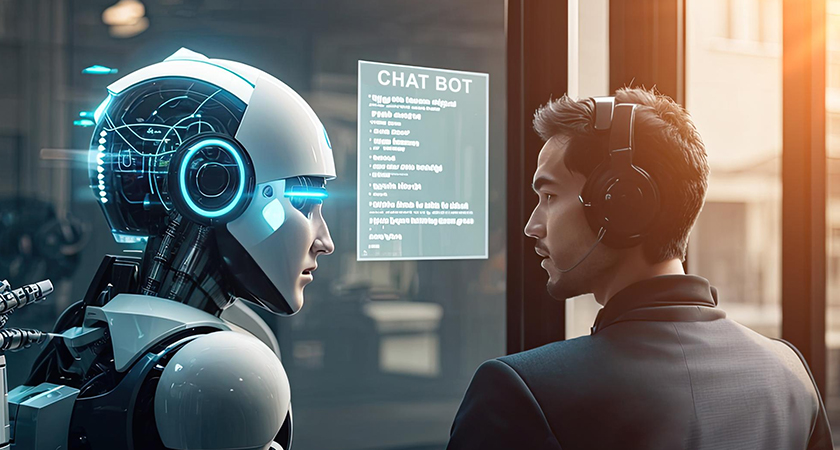
If you are evaluating this shift for your enterprise, the first thing to clarify is that chatbots and AI agents are not the same kind of system just because both can talk through natural language. That similarity often holds at the surface.
It starts to break once the work needs to move beyond a single response. Chatbots are reactive. They respond to prompts, guide users, and handle narrow conversational tasks well. AI agents are goal-driven.
They can plan steps, use tools, evaluate progress, and keep work moving toward an outcome. In practice, that means one helps your teams answer questions, while the other is built to help move work across a workflow.
Why Enterprises Are Moving Beyond Chatbots
From what we see in enterprise environments, chatbots still do useful work. They answer questions, guide users, and remove small interaction frictions. The limitation starts showing up once the work has to continue beyond that exchange.
In your environment, the real process likely moves across systems, approvals, teams, and follow-up actions. That is where conversational speed alone stops creating enough impact. This is why enterprises are moving beyond chatbots.
Faster answers help, but they do not automatically make execution smoother. The stronger requirement now is AI that supports workflow continuity, reduces coordination drag, and helps work keep moving across the process.
AI Agent Vs Chatbot: Where Chatbots Fit and Where AI Agents Create More Value
| Enterprise need | Chatbots fit best when | AI agents fit better when |
| User support | The interaction stays limited to answering, guiding, or routing | The request continues into actions, approvals, or follow-up steps |
| Workflow shape | The process stays narrow, predictable, and conversational | The process moves across stages, systems, and decisions |
| Operational effort | A response is enough to complete the need | Work still needs coordination after the first interaction |
| System involvement | No further tool or system action is required | The workflow depends on updates, checks, or actions across systems |
| Business value | Faster access to information or basic service support | Stronger execution across the process with less manual carryover |
| Best enterprise fit | FAQs, basic employee help, simple intake, routine routing | IT service flows, approvals, customer issue handling, document-heavy operations |
What Your Organization Needs to Operationalize AI Agents Reliably
To operationalize AI agents reliably, your organization needs clearer control across workflows, safer runtime execution, visibility into cost and latency, and less fragmentation across systems and approvals.
These concerns often slow adoption in the first place. Our Archestra Intelligent Agent Platform is designed to address them. It enables your organization to create agents from natural language objectives, connect them through native multi-agent orchestration, apply guardrails during runtime execution, and maintain visibility into cost, latency, and behavior from the outset. This provides a more reliable path for governed agent execution across enterprise workflows at scale.
How the Shift Changes Enterprise Workflows
Within your core workflows, the real change appears at the points where processes used to fragment. A service request passes through validation, assignment, action, and closure.
A customer issue moves through coordination, system updates, and follow-up. A document process runs through review, checks, approvals, and handover.
We usually see delays gather in those transitions, where ownership shifts, context gets rechecked, and progress depends on extra coordination. AI agents help those stages connect in a more structured flow.
For operations, IT, service delivery, and process teams, that leads to cleaner handoffs, less process fragmentation, and more stable execution across the workflow.
What Has to Change: Process, Roles, and Decision Rights
In your organization, stronger results usually depend on more than adding AI into the existing flow. Process ownership, escalation paths, and decision boundaries need clearer definition once agents start supporting execution across the workflow.
A request may still require human approval at one stage, policy validation at another, and exception handling where context changes. That structure matters because agent-led work performs best when roles stay clear and handoffs remain governed. Across operations, IT, service delivery, and process management, this shift calls for workflows designed around who acts, who reviews, and where control stays anchored.
Governance, Risk, and Human Oversight in Agentic Systems
As you look at agent use in your workflows, control needs to stay clear wherever risk, policy, or business judgment carry more weight. Some actions can move through routine conditions with little friction. Others reach an exception, a missing data point, or a decision point that needs human review.
That is where governance starts to matter more. Human oversight helps keep agent-supported work aligned with your business rules, compliance requirements, and accountability standards as conditions change. For your organization, wider adoption becomes more practical when approval boundaries, escalation paths, and visibility into actions stay clearly defined from the start.
FAQs
A chatbot mainly responds to prompts and conversations. An AI agent can plan steps, use tools, and help move work toward an outcome across a workflow.
An AI agent can plan actions, use connected tools, assess progress, and support multistep work across systems, approvals, and next-stage decisions.
A chatbot can answer questions, guide users, provide simple support, and handle routine conversational tasks such as FAQs, intake, and routing.
An AI agent is more suitable when work continues beyond the first interaction and needs actions, approvals, follow-up, or updates across systems.
A chatbot is more suitable for narrow, predictable interactions such as routine questions, simple guidance, employee help, and basic service routing.
Yes. A chatbot can evolve into an AI agent when it gains workflow logic, tool access, decision support, and the ability to carry work across multiple steps.
Chatbots improve access to answers and routine support. AI agents improve workflow execution by helping work progress across stages with less manual coordination.